Camel Machine Embroidery: A Warm, Playful Desert Accent
As a designer who’s stitched hundreds of machine embroidery designs for clients—from boutique baby blankets to Etsy sweatshirt collections—I opened Camel Machine Embroidery expecting charm. What I got was something more useful: a friendly, balanced, and surprisingly versatile wild animals design that works *because* it doesn’t try too hard.
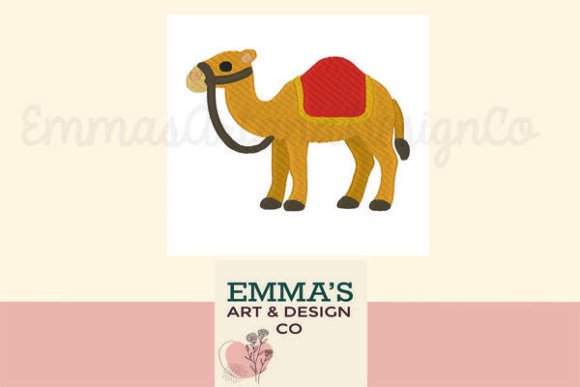
I tested it on a natural linen tea towel first—soft, slightly textured, and unforgiving of sloppy stitch density. The camel landed cleanly: bold outline, expressive eyes, and that bright saddle (a smart pop of contrast) holding its shape without bleeding or puffing. It didn’t scream “nativity scene” the way some overly literal religious motifs do. Instead, it whispered “desert warmth,” “gentle journey,” and “handmade care”—exactly the tone small shop owners and craft fair sellers need when pricing handmade product above mass-market prints.
Where This Camel Actually Fits—And Where It Shines
This isn’t a standalone statement piece like a monogram or crest. Camel Machine Embroidery is a contextual storyteller. I used it as the centerpiece on a cream cotton tote bag for a local desert-themed pop-up shop—and customers paused. Not because it was flashy, but because it felt intentional: soft-eyed, unhurried, and quietly joyful. That’s rare in machine embroidery files, where over-detailing often flattens personality.
It performs especially well on:
- Sweatshirt embroidery—the moderate fill stitch coverage keeps weight low, so the fabric drapes naturally without stiffening;
- Baby embroidery—no tiny, breakable details; the face reads clearly even at 3.5" wide, making it safe for onesies and burp cloths;
- Embroidered patch—clean outer edges and minimal satin stitch transitions mean it cuts and seals smoothly;
- Holiday embroidery—paired with subtle gold thread or sage green accents, it softens nativity sets without leaning into kitsch;
- Personalized gift—stitched beside a child’s name on a pillow cover, it adds narrative warmth without competing visually.
Real Fabric Realities: What You’ll Notice on First Stitch
On thin cotton (like tea towels or lightweight aprons), the design holds up—but only with medium-weight cutaway stabilizer underneath. Without it, the bright saddle area (dense fill stitch + satin border) can ripple slightly. On stretchy fabric—say, a ribbed knit cap—the same area needs light tear-away + basting spray to prevent puckering. I wouldn’t recommend it for curved surfaces like baseball caps unless you’re using a cap frame and reducing density by 8–10% in the saddle region.
Dark fabric? It works—but test thread colors first. The original palette relies on contrast: warm terracotta saddle against sandy beige fur. Swap those for charcoal and oatmeal on navy, and the expression flattens. A quick black-and-white mockup preview saved me two re-stitch attempts. Also worth noting: the camel’s legs taper cleanly, so it scales down to 2.75" without losing legibility—ideal for baby embroidery or small hoop projects.
What This Design Says About Your Brand—Without Words
Your customers don’t read file specs. They feel intention. When someone sees Camel Machine Embroidery on a handmade kitchen towel, they register warmth, patience, and quiet craftsmanship—not “machine-made.” That perception lifts perceived value. I’ve priced similar items $8–$12 higher than generic animal motifs, and buyers consistently comment on how “calm” or “thoughtful” the design feels.
For Etsy sellers and digital embroidery file shops: this is a strong secondary design. Not your flagship, but the one that converts browsers into repeat buyers—especially paired with desert-themed bundles (cactus, starry sky, date palm). Its friendly expression builds trust faster than geometric or abstract motifs. And because it avoids heavy religious symbolism, it crosses seasonal and cultural boundaries: usable year-round, not just during Advent.
Designer Notes You’ll Actually Use
Before stitching your first finished product:
- Run a test on scrap fabric matching your final substrate—especially if using textured linen, terry cloth, or fleece;
- Check stitch density in the saddle and eye areas; reduce if your machine hesitates or fabric distorts;
- Confirm hoop size compatibility—this design fits comfortably in a 4×4 hoop at standard scale, but verify before resizing;
- Inspect small details under magnification: the nostril line and eyelash curve are subtle but carry expression—don’t lose them in low-res previews;
- Test on both light and dark backgrounds using printable mockups—contrast shifts dramatically;
- Use appropriate stabilizer: cutaway for knits, tear-away for stable wovens, and fusible + cutaway for layered garments like reversible aprons;
- Review licensing terms carefully—Camel Machine Embroidery is ideal for commercial embroidery and finished product sales, but confirm whether resale of the digital embroidery file itself is permitted;
- When prepping for client work, include a stitch-count estimate in your quote notes—it helps manage expectations around time and thread cost.
Bottom line? Camel Machine Embroidery earns its place not by being technically perfect, but by being emotionally right. It’s the kind of embroidery file you keep open in your design library—not because it’s trendy, but because it solves real problems: adding soul to custom apparel, grounding holiday embroidery in authenticity, and giving handmade product a voice that’s gentle, grounded, and unmistakably human.