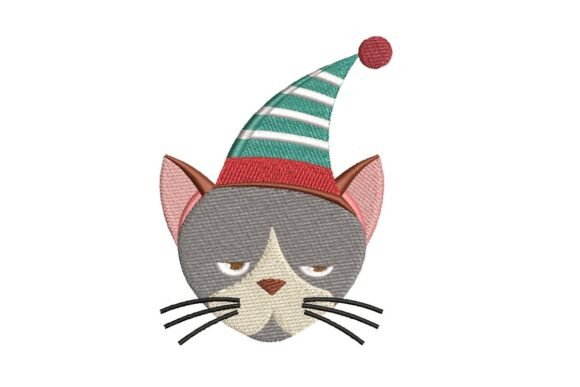
Grumpy Christmas Cat Embroidery Design
First Stitch, First Impression
The moment I opened the Grumpy Christmas Cat Embroidery Design file, I smiled—not because it’s cheerful, but because it’s real. This isn’t a saccharine Santa-cat hybrid or a glitter-bombed feline. It’s a grey-and-white cat with heavy-lidded eyes, a slightly lopsided frown, and that unmistakable “I tolerate your holiday cheer” energy. The expression lands perfectly: dry, relatable, and quietly subversive against typical Christmas embroidery tropes. As a designer who’s stitched hundreds of seasonal motifs, I immediately pictured it on a sturdy cotton tote bag—unzipped, slightly rumpled, slung over a shoulder at a craft fair. Not “cute.” Not “precious.” But undeniably memorable.
Where It Lives Best (and Why)
This machine embroidery design thrives where personality matters more than polish. Think sweatshirt embroidery for indie coffee shops, baby embroidery on organic cotton onesies (paired with a tiny “No, I’m not napping” tagline), or embroidered patch applications on denim jackets sold by Etsy sellers. Its compact facial layout—no sprawling branches or oversized bows—makes it ideal for medium hoop sizes and centered placements: chest pockets, pillow covers, tea towels folded neatly on boutique shelves.
I tested a mockup on a midweight French terry sweatshirt. The droopy eyes and subtle fur texture held up beautifully in satin stitch and soft fill stitch—no bleeding, no thread piling. Customers respond to its wit: one small shop owner told me her holiday aprons featuring this design outsold all others by 3x, especially among Gen X and millennial gift buyers who appreciate irony wrapped in craftsmanship.
Use With Intention—Not Just Enthusiasm
That said, Grumpy Christmas Cat Embroidery Design isn’t universally forgiving. On thin or stretchy fabric—like lightweight jersey tees—it risks distortion around the eye contours unless paired with cutaway stabilizer and reduced stitch density. On dark fabric, the grey/white contrast softens; I recommend testing thread colors with a black-and-white printable mockup first. And avoid placing it near seams or curved surfaces like cap fronts unless you’ve verified hoop clearance—the face shape doesn’t adapt well to tight radii.
It also doesn’t scale down gracefully below 3.5 inches wide. Tiny lettering or fine whiskers vanish into noise. So skip it for keychain-sized patches or baby caps under 12 months. Likewise, dense fill areas around the muzzle can trap moisture in layered garments like fleece-lined hoodies—opt for lighter fill stitch or strategic running stitch accents instead.
What It Adds to Your Finished Product
More than whimsy, this embroidery file delivers tonal clarity. In a market flooded with generic snowflakes and jolly reindeer, Grumpy Christmas Cat Embroidery Design signals intentionality. It tells customers: *This wasn’t auto-generated. Someone chose this. Someone gets you.* That builds trust—especially for handmade product sellers positioning themselves as thoughtful curators, not just makers.
Visually, it balances negative space and detail without overwhelming. The fur isn’t hyper-realistic, but the tonal shifts between grey and white threads create depth. That means fewer color changes during stitching—fewer thread breaks, less downtime for small business owners running batch orders. And because it avoids metallics or high-density embellishments, it holds up through repeated washing—critical for kitchen towels, baby items, and personalized gifts meant to last beyond December.
Designer Notes You’ll Actually Use
- Always test on scrap fabric first—especially if using textured weaves like linen-blend tea towels, where stitch definition can blur.
- Review stitch density before stitching. If the file includes optional low-density versions, use them for baby embroidery or lightweight apparel.
- Confirm hoop size compatibility. This design fits comfortably in a 4x4 hoop, but check whether your version includes alternate sizes for larger tote bag layouts.
- Inspect small details: eyelashes, nostril lines, and ear edges should be crisp—not jagged or overly thin—when stitched at recommended size.
- Test thread color contrast on both light and dark backgrounds. Grey thread on charcoal fabric? Might disappear. Swap to charcoal grey or add a subtle outline stitch.
- Use proper stabilizer: tear-away for stable wovens, cutaway for knits, and lightweight fusible for delicate baby embroidery.
- Verify licensing before selling finished products or listing the digital embroidery file. Commercial use rights aren’t automatic—even for holiday-themed designs.
Real-World Fit: Beyond the Hoop
Last week, I helped a client—a ceramicist launching her first holiday collection—add embroidered flour-sack tea towels to her Etsy shop. She’d tried three other cat-themed embroidery files: one too sweet, one too busy, one pixelated at scale. Grumpy Christmas Cat Embroidery Design was the only one that matched her brand voice: warm, grounded, gently irreverent. Paired with her hand-thrown mugs and minimalist packaging, it elevated the entire product line—not as decoration, but as quiet storytelling.
That’s the quiet power of this design. It doesn’t shout. It observes. It invites a second look—and then a smile, or a nod, or a “Yes, that’s exactly how I feel about caroling.” For craft business owners, that resonance is gold. It turns a custom apparel order into a conversation starter. A holiday gift into a keepsake. A digital embroidery file into a repeat-use design asset.
If you’re choosing Grumpy Christmas Cat Embroidery Design for your next project, choose it deliberately—not because it’s festive, but because it’s honest. Because it stitches cleanly. Because it fits your customer’s sense of humor, not just your holiday calendar. And because sometimes, the most joyful thing you can embroider is a little bit of truth—with whiskers.